


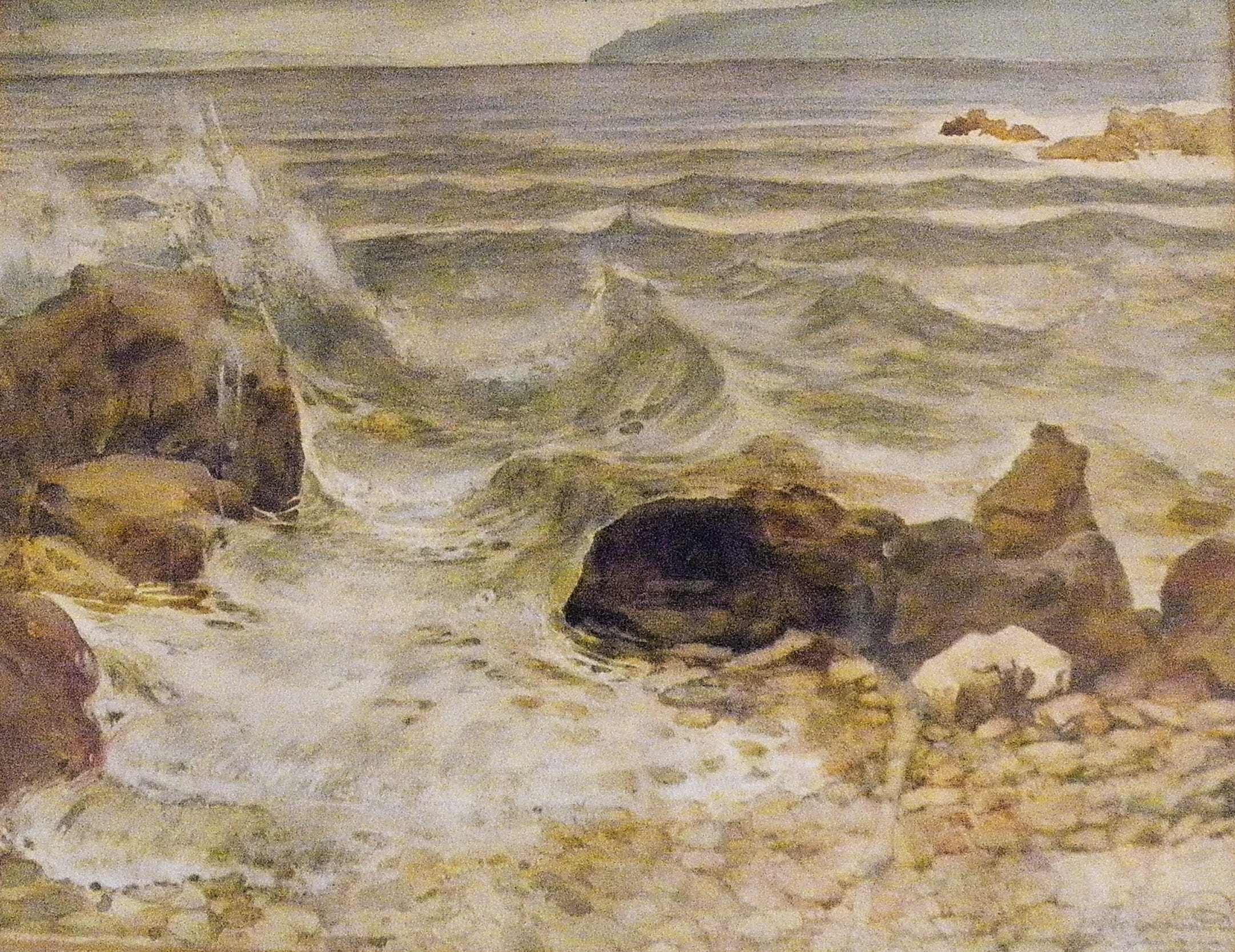
Amid the political turmoil and societal upheaval at the dawn of the 20th century, The Burning of the World tells of one man’s descent into the hell of World War I and his uneasy return to the world he no longer recognized.
The memoir is striking due to the novelistic way it is written. Dialogue is included and we read such passages as “Shh!” whispered Sereghy or Kriegl blushed, hunching his shoulders and putting a finger across his lips. The scenes are rendered picturesque; The sun is low in the sky. Ahead of us, light is thickening at the edge of the forest, turning grey. These flourishes elevate beyond purely the historical into something quite literary and alive. The reader is thrust forward, as if seated next to Béla himself, gently swaying and clattering across the railways of central Europe.
It’s astounding that he could have written in this way given the scholarly assumption that he produced most of this work during his banishment from public and professional life during the communist occupation of the 1950s. Was he a man with the rare blessing of a memory such as this? As with all memoir, the verisimilitude of specific strands of dialogue or the exact timeline of events is assumed to be blurry and hazy, as in autofiction. I have no interest in such academic and historical rigor, though. What truly matters, and what is powerful, is the ability to convey emotion, scene, and place, thus transporting us into memory. Of this, there is no deficiency.
It was a superlative translating and editing process that pulled forth such a work. Peter Zombory-Moldován, his grandson, inherited the forgotten manuscript and through what I can only assume to describe as an act of pure love, ushered it towards publication. One can only wonder how many more words and stories have been lost to the slow decay of time. How many worlds once vibrant and alive have ceased to exist - evaporating into the void.
In this case, the degradation is stayed, highlighting the importance of the simple act of the written word. The power of the diarist and journalist. The power of the artist and the observant. The power of books and story and the shared human experience. I believe this down to the depths of my very being.
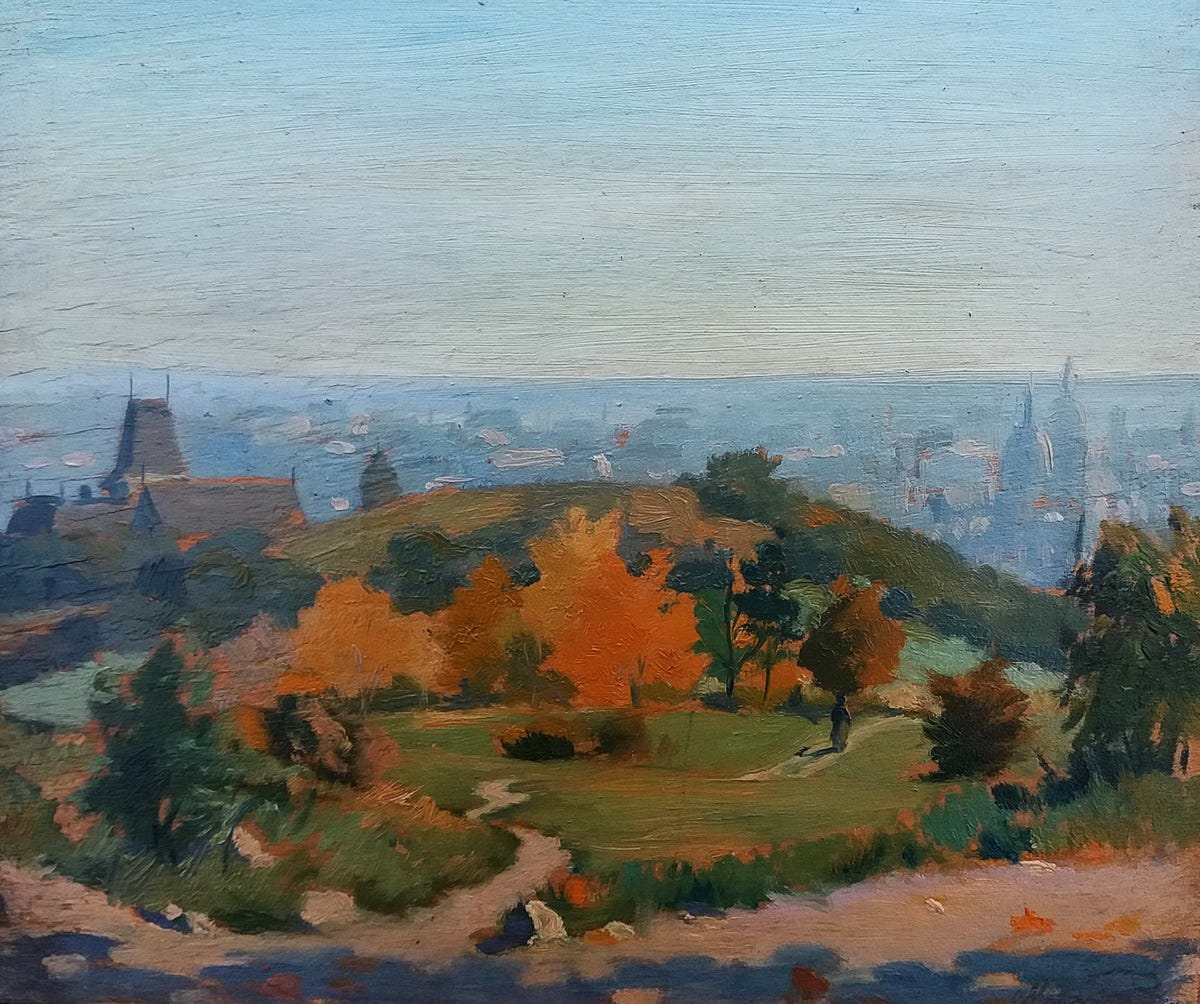
We meet Béla on holiday and away from Hungary as tidings of war are breaking across Europe. It was a war that felt both inevitable and impossible to him.
This war seems to me to be like first shudder of cold down a man’s spine.
War in the Austro-Hungary Empire hadn’t been seen in 70 years and seemed truly impossible. He didn’t want to fight, and suspected his Serbian enemies of the same. He was of a class sheltered from struggle and above the seething discontent of this age of isms. Enmeshed in the sophisticated, and intellectual culture of urban Budapest, he was bereft of a reason for war. All the same, he became a reluctant pawn in a battle of nation states. It is illuminating to observe how fragile are the threads that hold our lives together.
Swiftly traveling by train, he left the seaside resort of a world quickly vanishing and returned to Budapest for a few tenuous days. From here, he stayed in no place too long. Garrisoned and outfitted as a ranking officer, he and his men began a grim march toward the eastern front of the oncoming apocalyptic conflict.
They reached the very front of the conflict and artillery rained hellfire down upon them. Life became cheap. Death became normal. It is the hell of war. Béla was left for dead amidst the carnage and wreckage of the Hungarian army. He is injured from shellfire and can barely stand.
Saved by the faithful Jóska, they flee the front and the oncoming Russians. Heaped onto the back of a cart with other wounded and dying he bounced along rutted rural tracks. They were of the last band of limping and gasping wounded, chasing rumors of escape in Lubaczow or Basznia. At this point the Hungarian army is in full rout. They must continue on and reach the last crowded train before the oncoming Russian army.
It’s easy to imagine the horror felt by a defeated and fleeing army. Stumbling, stopping, or slowing meant certain capture and probable death. The last train rises above as a symbol of salvation and hope. Can you make it? Can he make it?
Béla and Jóska, his ever faithful squire, reached the congested train station. Jóska dragged him into a compartment and left in search of provisions. Eventually Béla was deemed unfit for further combat and continued to flee - back to the doorstep of his parents’ home exhausted, injured, caked in blood, and alive. So begins his convalescence. At the hospital he is granted three months leave and while his body quickly heals, the rest of him will take longer.
I didn’t want to hear anything about victory or defeat. Let me live for three months. Let me paint.
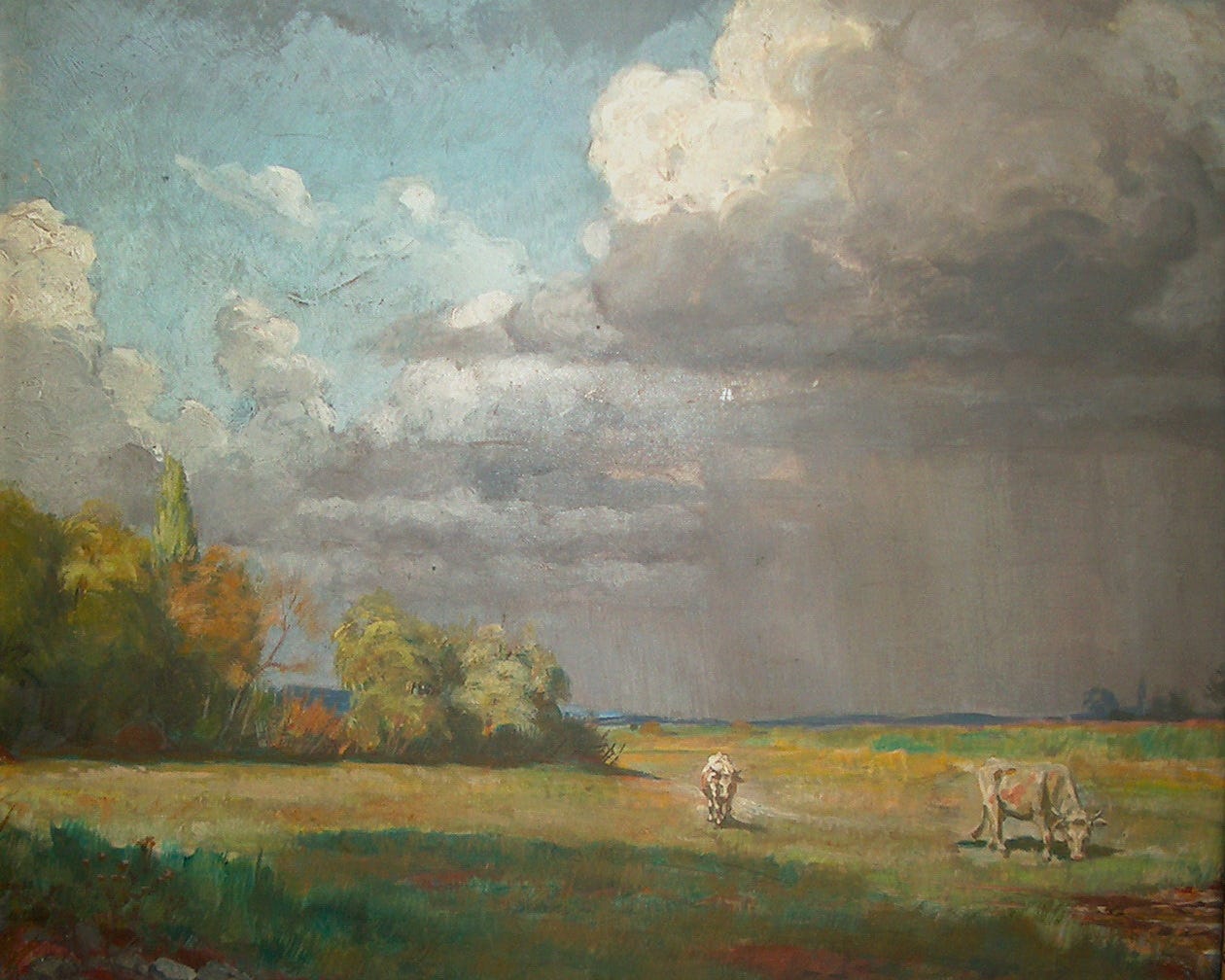
It is upon his return to a world only tangentially affected by the hellish destruction exploding across Europe that the memoir’s truest power shows through. Béla expresses an existential undoing within his soul. It’s an honest account and one that stretches across time and still speaks to us today.
Things could not just go on from where they had left off. I had been an atom in the great throng of Budapest; now, that tie was starting to loosen.
I’m reminded of another Hungarian, the great Magda Szabó, confronting how war and tragedy can forever alter the course of a life in the poignant novel Katalin Street. There, we can see how life could have happened, how it should have happened for the characters. Interrupted by war and death and the inconceivable idea of taking life we see how life actually occurred. It is greyed and darkened and saddened and all that remains is a nostalgia for the former days. What might have been if the evil inside of humankind wasn’t allowed to burst forth and destroy?
In a more intimate way we walk the old roads of nostalgia with Béla. Lost and aimless he wanders the old well-worn ruts of his life seeking meaning, hope, and stability. He isn’t fit for the studio and teaching and sitting down to paint seems impossible at this juncture. He is restless and unsure.
This is the point in the memoir that speaks directly to my own personal feeling of disquietude. To my own ennui, though born of different symptoms. He sneaks into the old coffee house, the old center of culture and cannot stay. It is over for him, it is finished. He must continue to move on, to seek a connection, a home, a place to lay his weary head and rest. War and death and destruction have led to an agitation that he cannot find the answer to.
My own life has not been disrupted by such powerful forces that shook the world of Béla. Yet, the isolation, the screaming silence of modern life has struck its own discord in my life. And the longing, the desiring for what once was, for art, life, freedom, and un-burdened brotherhood of humanity flows within me just as it did in Béla - though we are separated by the onslaught of one hundred years of history.
Instead of the war-torn streets of Budapest, I drive the isolated streets and highways of America - disconnected from place and people. I yearn for the idea of what Béla lost. The café, the public space of dialogue and community. A life of the intellect expressed through painting or writing or speaking. In many ways it was walking the streets of Budapest with Béla, filled with a nostalgia of what I will never have, that birthed the crazy idea of The Cultural Review.
Eventually Budapest was not enough and Béla drove deeper into his past searching for peace in his soul. He visited his uncles but eventually ended up in Lovrana, on the shores of the Adriatic Sea, at the door of the dairy farmer Mauser.
There he walked along the coast and was joined by a friend and spoke of art and war and life and politics and all the things that mattered. It’s a way we all should speak - of the things that matter, of the soul and fate and ideas and art and everything in this vast cosmos that brings us into communion with one another. It was there on the shores of Lovrana that I feel he finally found his peace and came to terms with the changing of everything, with the burning of the world he once knew.
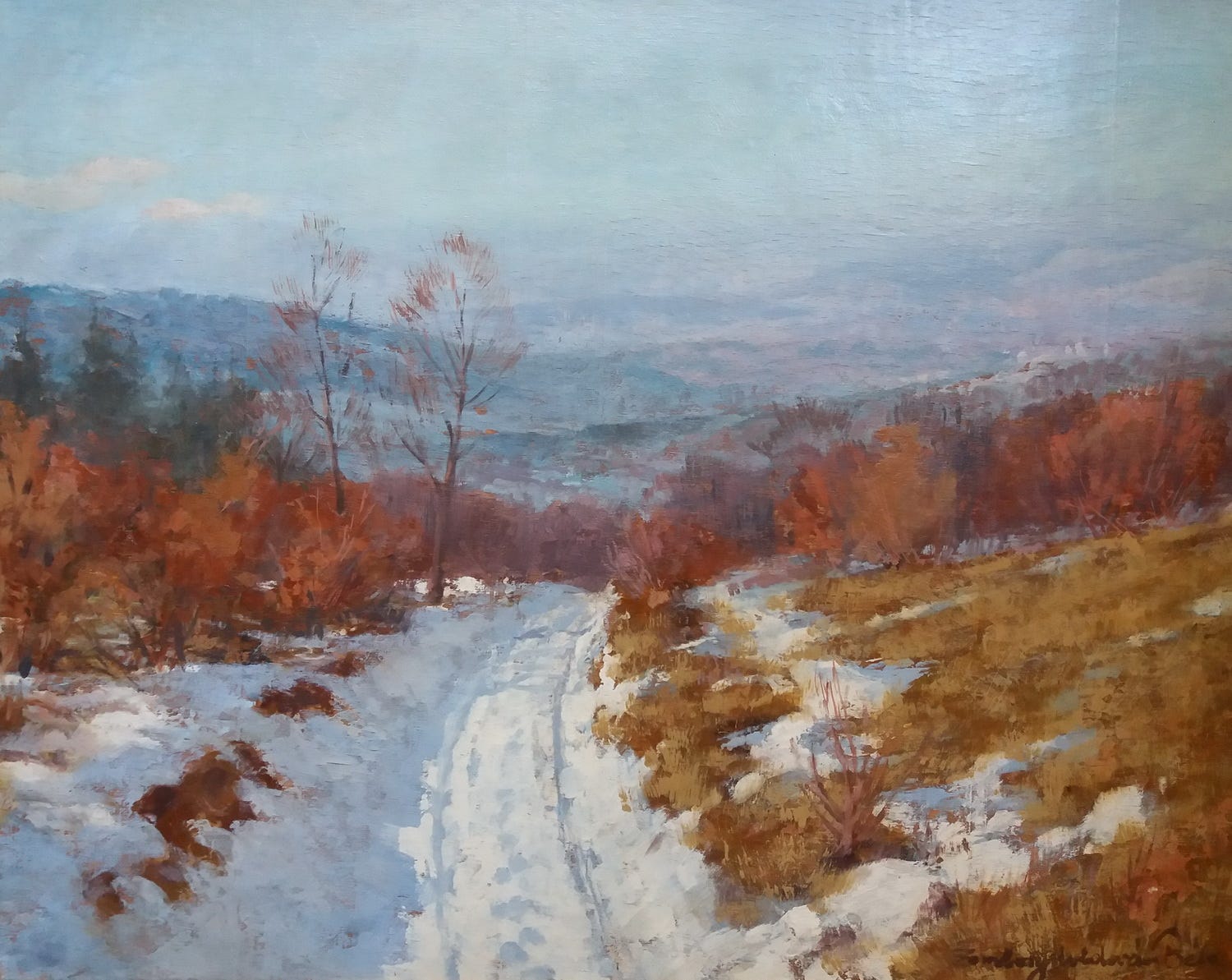
How to put into words the rupture that had taken place within me? I knew that, until I found the point at which I could reconnect, I would have no peace.
Béla returned from war searching for what never could be found again… searching for a life and society that had expired. In many ways, I am still.
This memoir is beautifully published by the ever reliable New York Review of Books.
Next week at The Cultural Review: It Was Just an Accident