


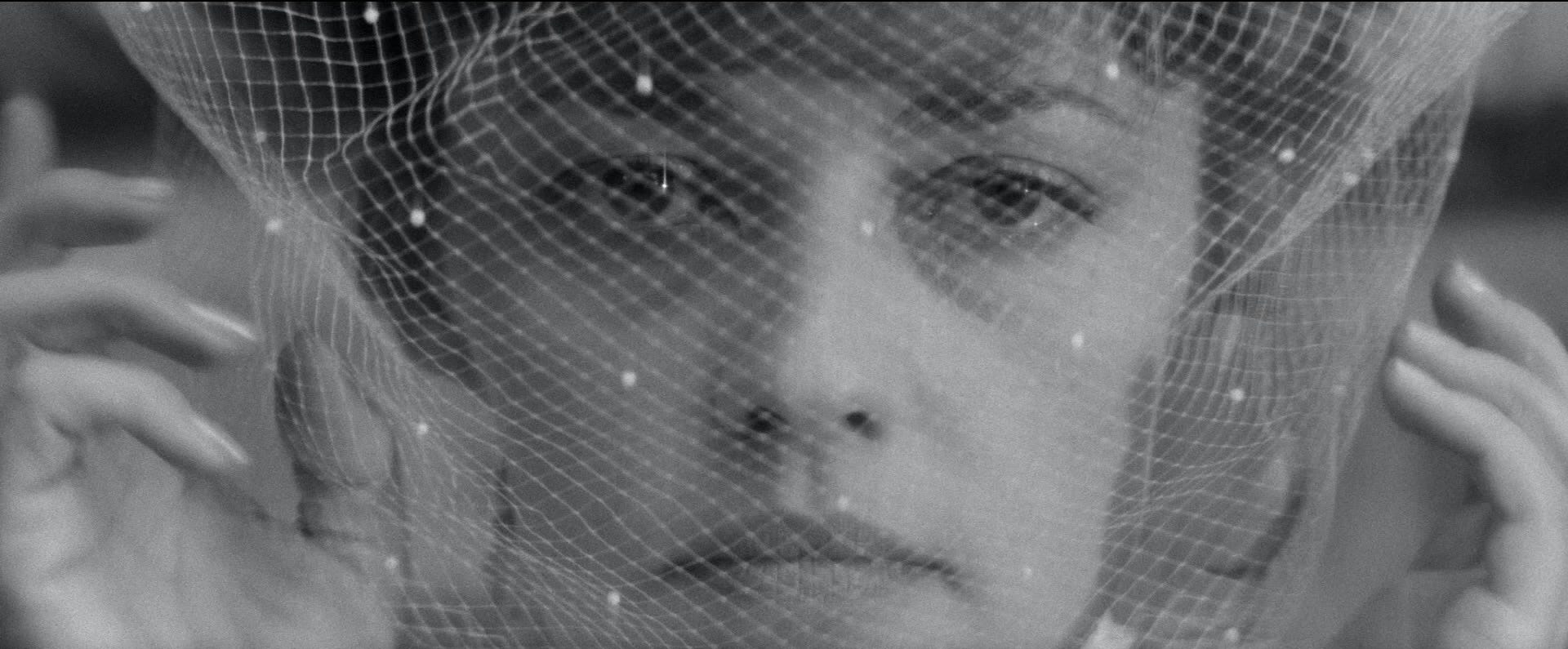
As a young man first discovering film, I saw Jules and Jim many years ago. At that time, I lived alone in a shabby apartment in a shabby town in the forgotten middle United States. I had become a bit of a recluse and on the weekends would watch three to four films daily. I experienced life through the veneer of a screen and could be described by what the Japanese refer to as a hikikomori.
I had stumbled upon, what was then niche, the Criterion Collection. I was furthered along by a crash course film school in The Story of Film. I found lists of directors and film movements and started working my way through the daunting film canon. In that period film became the center of my life. Perhaps it was just the coping mechanism of a lonely young man trapped in a place he didn’t belong.
There are a few films that stand out from that blur of sight and sound, ones that are forever personal classics, and Jules and Jim is just that for me. I couldn’t tell you what it was that endeared me to the film on first watch. It could have been the narration, the friendship, or the unforgettable and shocking ending. It could have been the way it opened my eyes to new worlds, new possibilities. That it gave me hope that my world wouldn’t always be small.
The film opens with alacrity. It starts without pause or breath, adhering to the speedy ethos of the French New Wave. The narration brings us into Jules and Jim’s burgeoning friendship, one that forms in a matter of screen seconds. They parade through Paris, entering cafés and gyms while discussing women and art and poetry. It feels as if they are a part of Hemingway’s A Moveable Feast.
Truffaut uses narration, dialogue and excerpts of low frame rate, era specific scenes, to build the mood and feel of the film. It has a touch of the absurd and comedic and a touch of the somber. It echoes life itself. He blends these modes seamlessly, choosing the right moment to cut or to change. It is easy to overlook, but would be disastrous in less assured hands.
The narration of the film is singularly powerful. As storytelling tool, narration can often fall flat, but in Jules and Jim, it excels. It is hauntingly heavy and does much of the work in setting the mood and feel of the film. It provides emotional weight and heft and is reminiscent of Y Tu Mamá También. Cuarón is clearly riffing on his predecessor Truffaut.
Their stories, though adorned by personal mythologies, were the truth.
But as always happens, it was a partial truth.
Much was omitted, such as how Julio lit matches to hide the smell after using the bathroom at Tenoch’s house.
Or how Tenoch used his foot to lift the toilet seat at Julio’s house.
Those were details they didn’t need to know about each other.
Here, Cuarón uses the narration to tell us something deeper and unsaid, but felt by both Julio and Tenoch. He violates the show don’t tell rule, just as his forebearer Truffaut did many years earlier. But it works, and rules can be broken by those skilled enough to do so. Like any good French New Wave, Truffaut breaks many “rules of film” and all his decisions manage to work.
Many are the connections between one famous ménage à trois in Y Tu Mamá También and that of the beguiling Catherine and her titular lovers Jules and Jim. That is part of the story of film itself, even art. Comments on comments on comments. Reactions to what came before, homage, stealing, riffing. Jules and Jim is the genesis for many.
A man named Albert shows Jules and Jim a statued face. It frightens, as if it were portending something ominous. It exerts power and influence over both men in ways they could not understand. Shortly afterwards they meet Catherine, her face an echo of the powerful stone.
They stared at the face for an hour.
It stunned them into silence.
They were speechless.
Had they ever met such a smile?
No. If they ever met it, they would follow it.
Jules and Jim returned home dazzled.
Jules disappears with Catherine for a month. He reappears and they become a happy threesome. They run through the city, Catherine disguised as a man. They take a trip to the sea and frolic through the woods. Jules confesses his desire to marry her, and the three of them return to Paris.
One night while walking home from the theatre, Jules is in an exceptionally expansive mood and is spouting philosophical thoughts to Jim as they walk along the Seine. Catherine is clearly annoyed, but Jules doesn’t seem to notice or care. In an act that would endear her to Jim, she takes a calculated leap into the river. She breaks the spell and regains her chaotic mastery over them.
Then the film changes. Jim misses a mysterious rendezvous with Catherine by mere minutes. Jules and Catherine leave for Germany to get married. War breaks out, and in the trenches Jim prays he hasn’t killed his friend Jules. War ends and Jim visits the couple in Germany, who now have a young child.
The film slows and centers itself on Catherine and her relationships, on her unsettled nature. Jules confesses to Jim her unfaithfulness and his fears that she will leave him and the child, just like she’s done before. Jules’ softness appears incapable of holding such a woman.
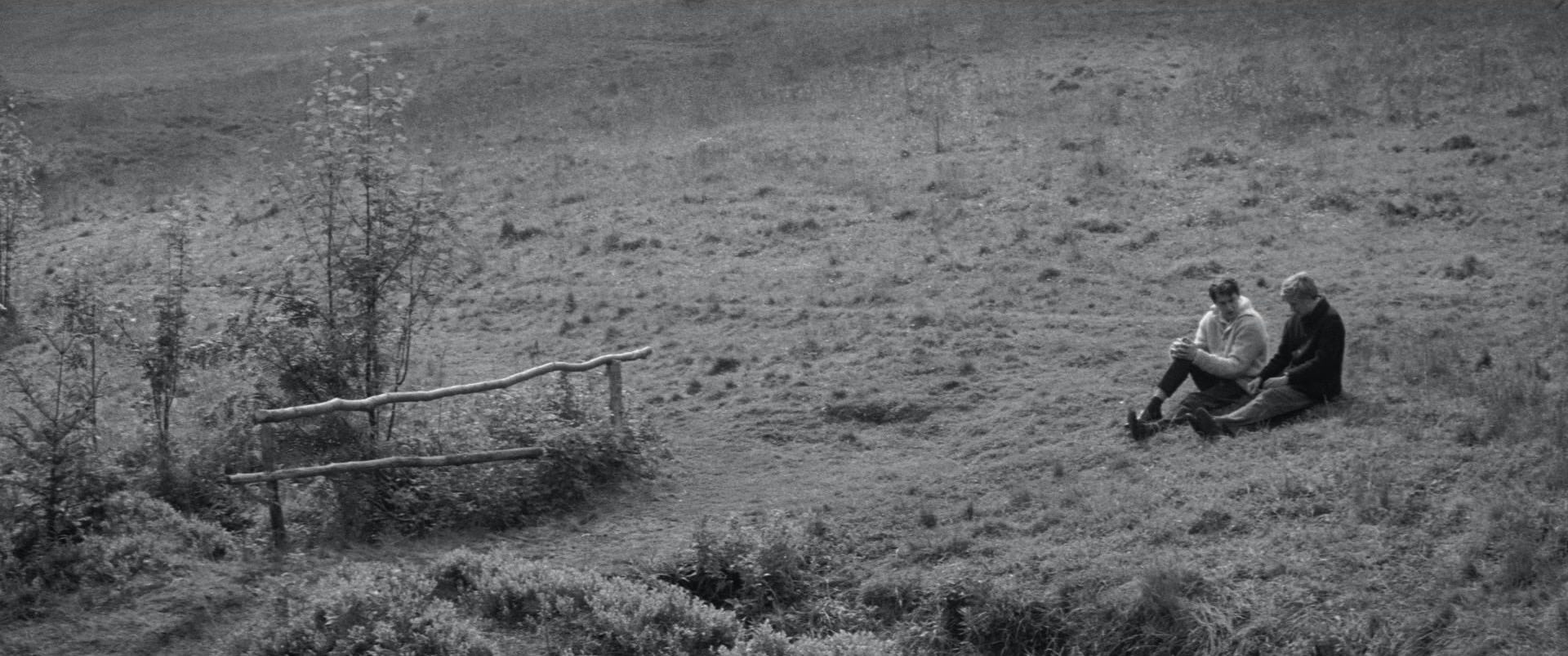
There is an ungenerous way to read Catherine, and we see little flashes of it in the beginning of the film. How she becomes upset at the beach when the men are focused elsewhere, or how she jumps into the Seine to make a scene and reorient their focus. Then again, in Germany after so many years she jumps from lover to lover, while still holding Jules in her strange power. She will be held by no one, ruled only by her capricious nature.
She changes shape and form. She dresses as a man, or as a great beauty. At other times she appears a spinster or a married wife and mother, covered with a hat and bespectacled. Her appearance morphs, presumably to fit her setting. It’s just as she changes her posture to fit what she needs at the time, sending men away or towards her central orbit as she sees fit. She is always taking.
I cannot bring myself to judge her though, to hold her contemptible. I do not understand what she is. I remain confounded by Jules and Jim’s rapture, even while containing the ability to coolly assess and understand what she is doing in the situation. She embodies the mesmerizing statue, one that can be analyzed at a great distance, but strikes those powerless who come too close.
I suppose that is the story of any great love, or that of the great siren song. Venture too close to listen and to see and become paralyzed before the great spell. That is what Catherine is to Jules and Jim. She is the siren song that pulls them along. She offers the greatest of gifts of joy and happiness, but at a cost that they cannot keep paying.
She reminds me of Tashi in Luca Guadagnino’s Challengers. A woman similarly holding two men at sway, choosing between each as it suits her and her aims. A woman who is equally desirable and opaque. Someone who is seeking a certain je ne sais quoi, that indescribable quality and feeling out of life. Someone who is fully unique and yet still strangely vulnerable in her own way.
She remains a mystery and Jules in his desperation condones Jim’s relationship with her, wanting only to remain close to her. Jim is stronger though and eventually resists her pull and power. Or it is only the strength of distance that saves him? Eventually Jim becomes to Catherine what she was to Jules, and the circle is complete. And the night along the Seine is doomed to repeat.
Jules and Jim, the Don Quixote and Sancho Panza of Paris, remain in true and unjudgemental relationship. They do not rival one another, setting up obstructions for the other while vying for Catherine’s attention. They are the rarest of breeds, perhaps an impossibility, a truest of true friendship. One that is deserving of praise and mimicry.
Catherine, however you view her, is driven like a wedge between the two men. The war is thrust upon them splintering along lines of race and nationhood. Yet these are not capable of diminishing their bond. It is never Jules or Jim, never one and not the other. They are always and, and remain so until the bitter end.
It was their friendship, their way of being that I found so comforting one cold dark night as I sat in an apartment in the middle of nowhere and watched. And for a couple of brief hours I wasn’t alone, I was amongst Jules and Jim, galavanting through the streets of Paris, playing dominos on the beach, enchanted and afraid of a statued face that became a real woman.
That is what film and good books can do for you. They provide a way out of yourself. A way out of a dark situation. A way to experience many lives and make many friends. Film cannot replace life, and my cloistered existence was no way to live, but it can make life a better and fuller place to be. And now I’ll always have my friends Jules and Jim, waiting for me on the shelf whenever I feel I need to see them again.
You can find Jules and Jim at The Criterion Collection
Next week at The Cultural Review: Light While There is Light