


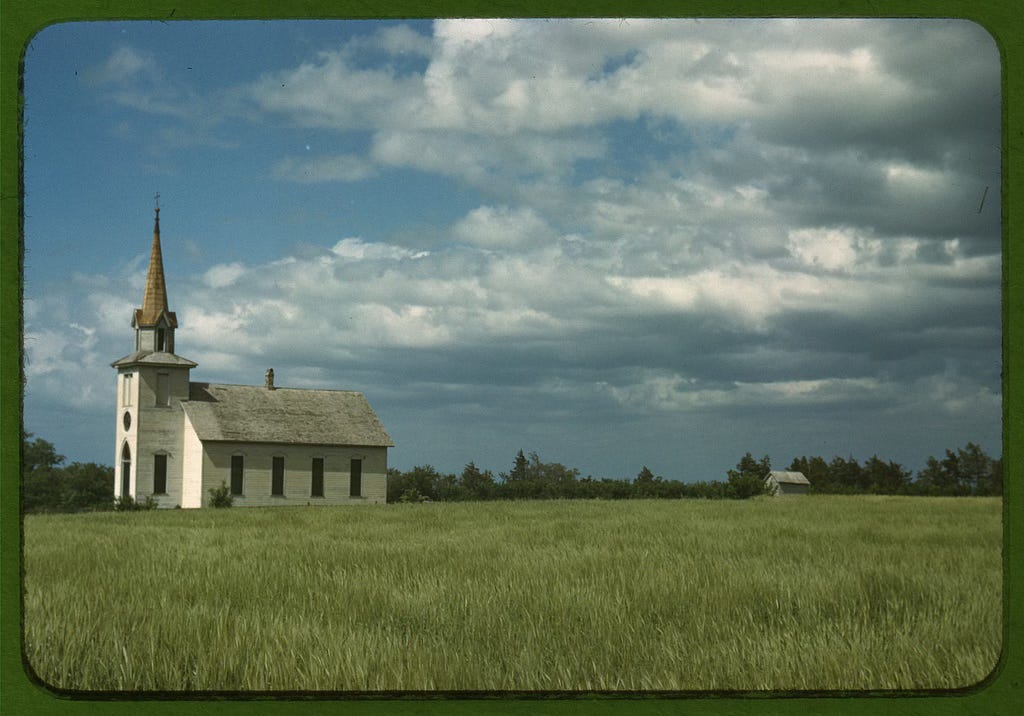

America, or more explicitly The United States of America, can be an enigma. It’s a mystery to me. I’ve lived on this distinct and large patch of land my entire life and I still don’t know what it is. It is many things to many people. It has many modes, many cultures, many classes, many hopes, many everything.
Many is one of its defining characteristics. It is a United States, a confederation of disparate parts brought together to form a whole. Irish, Italians, Scandinavians, English, Mexican, Somalian, Hmong, Chinese — America can be everything for everyone. But that makes it indistinguishable for many. It makes it heterogeneous, scattered, different parts of a broader whole. It lacks the cohesive center, the distinguishable identity of a Norway or Japan. In many ways it is an international zone open to all ideas and all cultures. In many ways it is not that, and hard as it may seem to see, there is a distinct and unique Americanism.
It’s a young country, an experiment, a hope. A hope that I hope keeps going. We only turned 250 years old last week. In Central Europe that period of history could be handled in pages, being close to it all, we measure it in volumes. Extinct nations, and empires have lasted far longer than the American experiment. What does that say for us?
Keith Waldrop offers a picture of this kaleidoscope of American experiences. One that is uniquely his own, and one that belongs to us all. As someone who has found himself contained between the coasts, it is a history that is imminently accessible and real. It is one that I can see and believe. It is one that I am afraid of.
I’m afraid because it is not educated, it is not elite, it is plain, and poor and superstitious. It is puritan, harsh, and uncouth. It is the America I fear the rest of the world mocks. The America of dusty plains, row crops, and small gridded square towns filled with churches and bars. It’s an America I know and have seen. It’s an America that has been dying since the 1960s and refuses to give up. A proud and wonderful America
It’s the forefather of an America raised on television and genetically modified crops. An America that consumes cheap food and cheap items and spends the evening reclined on La-Z-Boys. It is a brilliant and savvy America that is somehow anti-intellectual, while being filled with a rare and raw intelligence. Here the propagandist story we’ve told ourselves is believed and people still order freedom fries and shoot guns. Black people are hated because they always have been. And that is exactly what it means to be an American. And also, that is exactly not what it means to be an American.
That only represents one slice of the pie. Therein lies the challenge, the contrast, the sticky middle ground of being an American. How can we be that, while also being the world of Jack Kerouac, John Cheever, Toni Morrison, and F. Scott Fitzgerald? How can we have The New Yorker and The Criterion Collection and Slouching Towards Bethlehem while also having the Westboro Baptists and McDonalds, and Monsanto? How can a country produce The Birth of a Nation and Do The Right Thing? How can we possibly exist?
I don’t have an answer, but it’s all America. It is all part of our history, however terrible and fraught it might be. It all comprises that which we deem The United States of America. Its a place I both love and hate. It’s a place that I am eminently happy I was born and raised in relative safety and comfort. It’s a place that challenges me daily. A place I’m both never and always at home in.
And so we come to Waldrop’s version of Americana. A version filled with puritanism and religion and theology and poverty and conspiracy and loathing and hustle. In short, an America that is true and real. An America that I fear and am scared of. An America I wish that was better, but is still the free and unfettered America that has produced so much good and so much evil.
I’ve read many stories of revenants and apparitions, but my ghosts merely disappear. I never see them. They haunt me by not being there, by the table where no one eats, the empty window that lets the sun in without a shadow.
The first lines of the memoir tell of a ghost story. One we cannot see, that haunts without being present. It’s a ghost of emptiness and absence. It is the ghost of his now absent family. A family that comprises the bulk of this fictional memoir. One in which Waldrop fades to the background and hides in plain sight, while his bombastic family takes center stage.
His mother was pious and Christian. Obsessed with theology she would debate and judge others based on obscure beliefs surrounding predestination, the afterlife, and other topics that separate the many Protestant denominations. She would lead Waldrop across the country and back again joining churches and colleges that fit her current version of beliefs.
His father was a railman and Mason, he was not the pious believer his wife was. They divorced after he broke her glasses, presumably from a violent act. He remains a peripheral figure in the story. So much so that Waldrop doesn’t even consider him part of the family.
I wanted to get away from my father, too — he was in Kansas — though I never really considered him part of the family.
His brothers Charles and Julian were grifters, hustlers, deserters. They hunted for a fast dishonest dollar, were “saved” often and partially, and foolish enough to believe in the strange and occult. His sister was meek and mild, her only hope lay in the dream of becoming a pastor’s wife.
Waldrop, with his mother, sister, and brothers head east to the land of revival and Christian school. It is here that Elaine, his sister, finds herself a young pastor in training. It is here that Waldrop attends religious schooling where his brothers seem to come and go, leaving for the military and then returning again at random.
Eventually they scatter, his brothers to the winds, him to Chicago and Urbana for college he can’t really afford, his sister to scrape by with a poor pastors living, and his mother to Roanoke, and his father to die. His brothers show up at random, move in, and start a used car lot. His sister appears, having been evicted from a previous apartment. Eventually his mother appears out of nowhere. They lived together now, barely scrapping by. The car lot scheme teeters, but keeps the rent paid.
It was a bitter winter and in some ways the most uncomfortable year of my life, not from the cold only.
You can feel Waldrop’s plight. He is beholden to his family, he is trapped by them, he is confined by their brand of Americana. It’s ever so subtle, for he mainly conveys his experiences through a slightly detached and emotionless narrative. He explains what happened to whom and doesn’t dwell on the pure chaos and madness of it all.
It’s a family who find themselves temporarily obsessed with an Ouija board. One in which the mother thinks her son is married to a witch. One in which anything could happen. One that believes death to be a conspiracy and must be investigated on their own. Yet, Waldrop doesn’t judge his family, he doesn’t define it as good or bad. It just is.
That summer, I tried to take stock; Clyde had dropped out of the ministry; Julian was in prison; Charles was in love; Mother was speaking in tongues.
It’s an incredible thing to look at all of this messy life and not judge. To look at people who make seemingly irrational decisions and note that they are just people driven by unnumbered pressures and desires. I do not possess the same grace as Waldrop though, and look upon this American history and see only madness.
That is what scares me. The inconceivable madness of action and belief in these people. The serious and also casual approach to religion, changing denominations like choosing a grocery store or gym. The poverty, the conman nature, the conspiracy, and the occult, it’s all there. And that is very different from the life I lead. It is very different from the America that I want to exist. But that doesn’t change the fact that it was and is, present.
That is the thing about America, we are defined by difference. And it is too easy and too cheap to be afraid of difference, to hate it. Difference is everywhere. Difference is important and valuable. While Waldrop’s history may not be my America, not one I want or can subscribe to, it is an America. It will continue to exist in some form, just as hundreds of other Americas exist across this vast country.
The great irony is that eventually Waldrop flees to France, to Aix-en-Provence. It’s the only place he can escape his family. It is a distance too far for them. For while he doesn’t judge, it is clear that it was too much for him. They gave him an America he could not accept nor live with, and so he left.
I think sometimes we need to leave and sometimes we need to stay and sometimes we need to return. Eventually Waldrop returned and brought us Light While There Is Light. It shows a world I don’t understand, but sharing these stories and experiences is important and valuable because they tell us something about each other. They allow us to experience different lives and to maybe, just maybe, become more open to those differences that define us. And while this version of America may scare me and be one I don’t want to call my own, I’m glad it exists. I’m glad all the different versions of America exist because that is what makes a whole.
You can find Light While There Is Light at NYRB
Next week at The Cultural Review: I gave a friend my copy of Crazy Genie, so next week is TBD. I promise it will be interesting.