


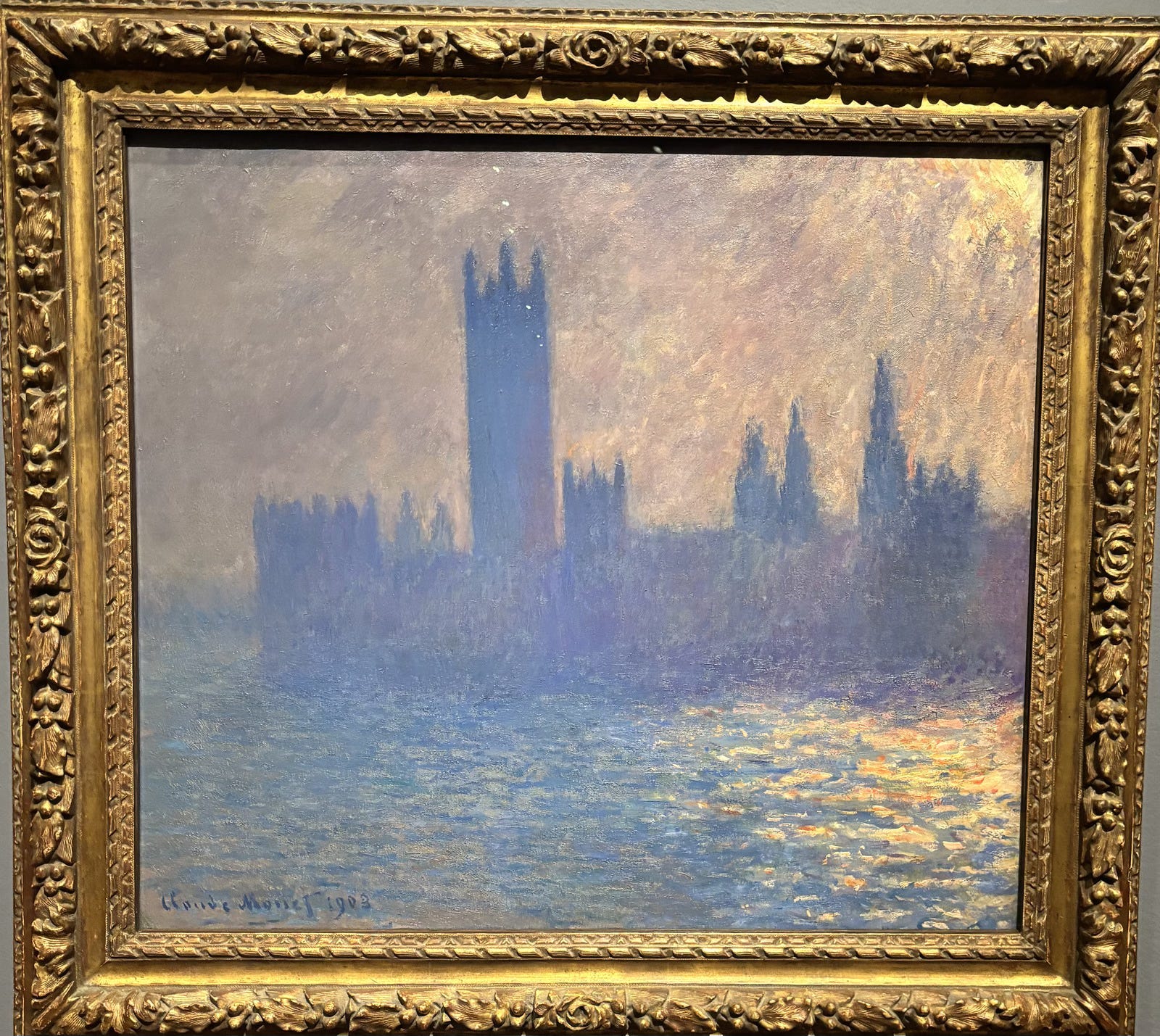
Claude Monet, Houses of Parliament, Sunlight Effect, 1903
The Industrial Revolution’s flames burned across Europe starting in the 1760s in Great Britain, reaching broad adoption by the 1840s, and concluding at the dawn of the First World War. Camille Pissarro (1830 - 1903), known as the father of the impressionist movement and Claude Monet (1840 - 1923), the greatest of the impressionist witnessed this rapidly changing world firsthand.
The mechanized pistons and gears that wrought the change from the pastoral to machine driven world of efficiency, was powered by coal. Coal, dark and black, that burns hot and dirty, emitted particulate matter containing mercury, sulfur dioxide, and more into the skies of Third Republic France and Victorian England.
The opening paragraph of Charles Dickens’s Bleak House (1853) provides the words to describe the mise-en-scène.
Smoke lowering down from chimney-pots, making a soft black drizzle, with flakes of soot in it as big as full-grown snow-flakes — gone into mourning, one might imagine, for the death of the sun.
Dickens speaks more explicitly and could be the first to use the word pollution in an environmental context.
Fog everywhere. Fog up the river, where it flows among the green aits and meadows; fog down the river, where it rolls defiled among the tiers of shipping, and the waterside pollutions of a great (and dirty) city.
Alongside Dickens’s words were the great Impressionists paintings of such scenes. Fog of that time is reference to Pea-Soup Fog, or London Fog, which we would now know today as smog. It was a phenomenon caused by the burning of coal to heat homes and the coal burned to ignite the capitalistic dreams of industrialists’ factories.
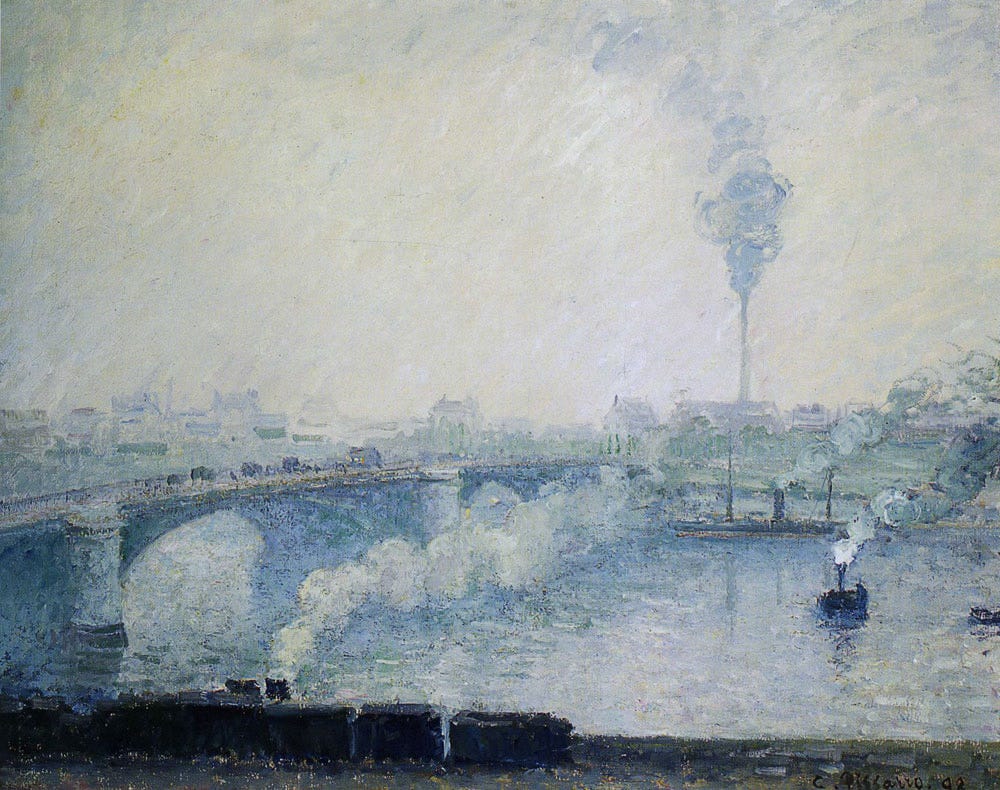
Camille Pissarro, Pont Boieldieu, Rouen, Effect of Fog, 1898
Pissarro, classically trained, father of Impressionism, and practitioner of Neo-Impressionism fills many of his cityscapes with the circular plumy swirls of smoke drifting across the skyline. It’s a sight anathema to our modern sensibilities. A plume of smoke in the air, is a foreign sight for us now. But for Monet and Pissarro it was common and ordinary and part of the landscape. It’s a component of the landscape they didn’t fail to capture and convey.
That blurry, hyper-real sunset effect from these masters is not always what it seems. In some cases it was created by the purity of beauty, the purity of the senses, as in Venice. For that is why I come to Impressionism and its offshoots. It’s the ability to make reality realer than it is. It’s the ability to layer emotion onto sight to create a moment that is truly unforgettable.
It provides what other forms cannot. Raw photography without music or feeling or history cannot achieve what Monet, or Pissarro, or what Van Gogh can do in a simple frame. They can tell a story, they can make me nostalgic for something I’ve never experienced. They can pull me back and forth and fill my cup fuller than anything the brutalistic realists can imagine.
Part of this beauty and magic is that the paintings feel alive. They seem to capture movement in the rippling of water, the billowing of smoke, or in the way a shadow falls. This appears as a still image of a moving and changing world that is vibrantly alive. It’s as if we blinked and the paintings appear as the last sight before the closing of eyelids. Then we can imagine, as if opening our eyes again, how the world would continue and how the wind would feel because the branch of a tree is tilted to the left or the puffs of smoke turn horizontal. We can smell the sea and hear the gulls in the harbor purely by the way the reflection of the sun casts itself on the reflective and luminous surface of water so perfectly rendered.
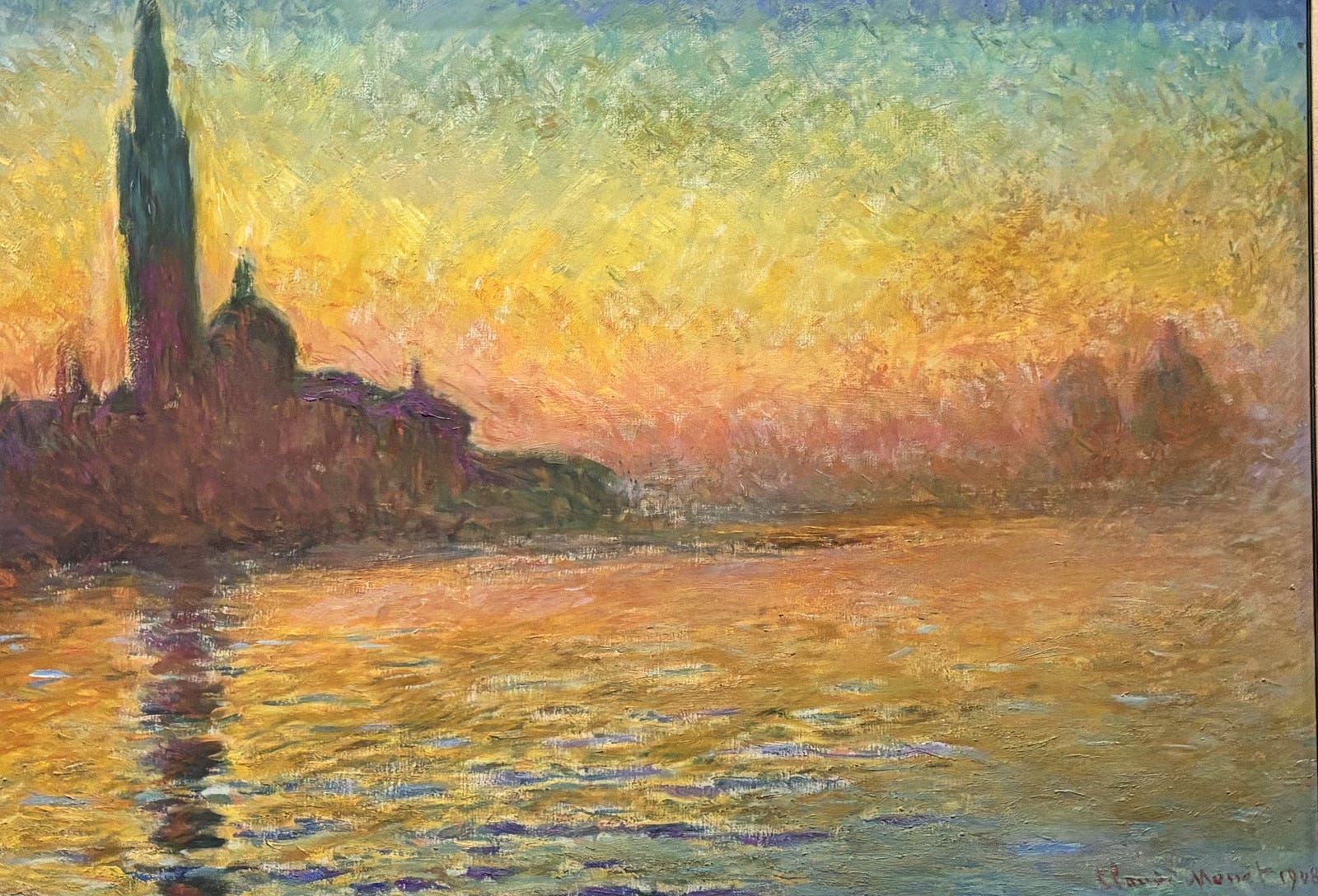
Claude Monet, San Giorgio Maggiore at Dusk, 1908
In many cases this gorgeous hazy effect is pollution and the beginning of environmental disaster. The Impressionists weren’t conveying how they felt towards the beauty of the viewscape, but indicating the reality of stifling and choking fog that draped across the sky and descended into the very streets of the city. They gave picture and feeling to pair with Dickens’s words and the rampant respiratory illnesses that plagued the times. They painted with truth beyond truth.
Perhaps their only downfall is that it still remains beautiful and picturesque. They are unable to remove the beauty and feeling and vibrancy from these pictures. They are not gruesome to me, they are not extreme, but subtler stabs at the choking march of industrialism.
What makes these dreary city-scapes so beautiful, when we know them to represent a horrific catalyst toward human degradation through the suffocating poisoned skies. When I look at Waterloo Bridge I can picture Sherlock Holmes stealing across the bridge dressed as a beggar. I can feel Mr. Hyde stalking the dark foggy corners. My own history, my own romantic ideals shrouded by the haze of literature skewing my perspective. But still, there is something pure and unadorned, that makes these paintings beautiful of their own right.
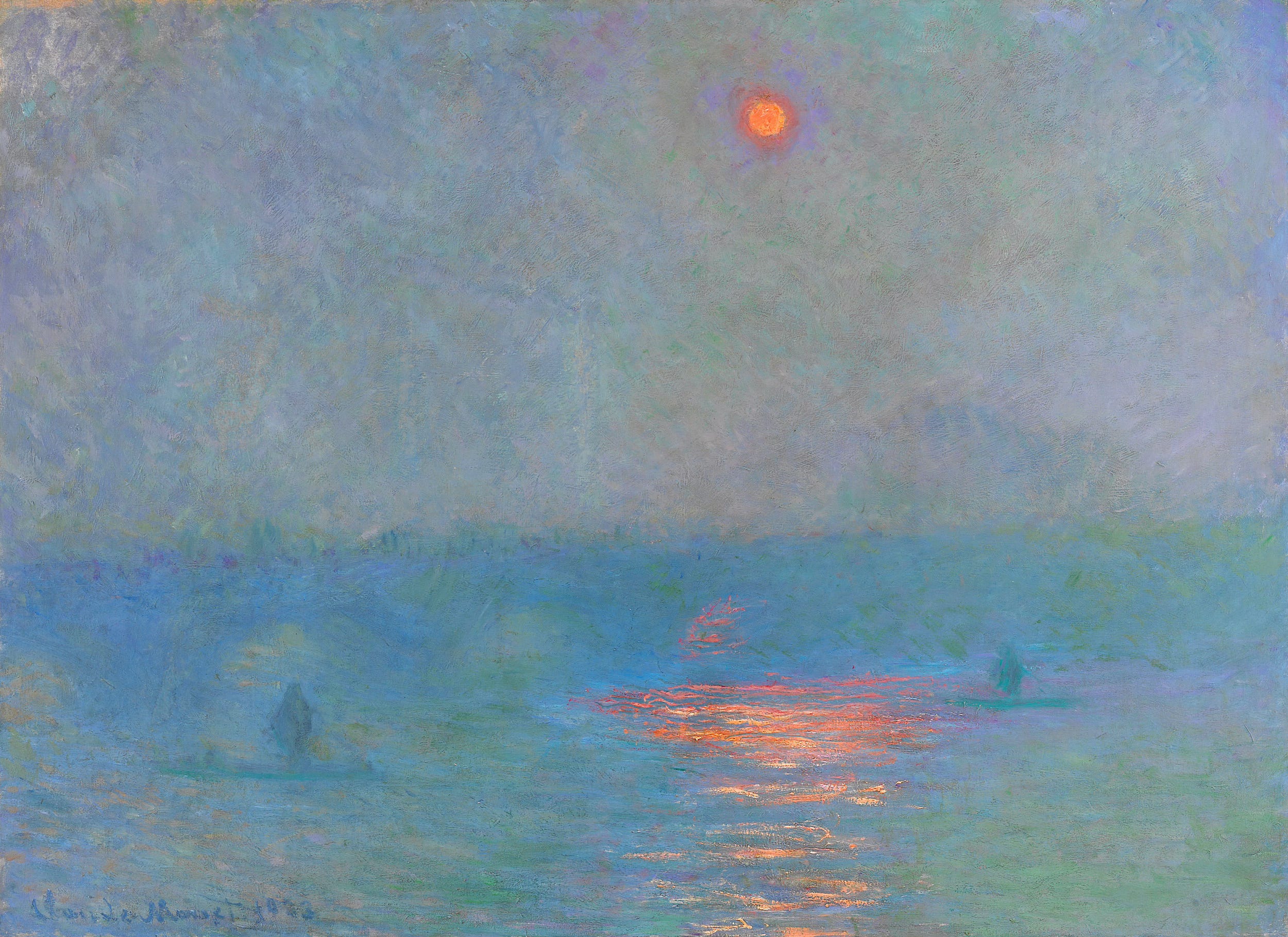
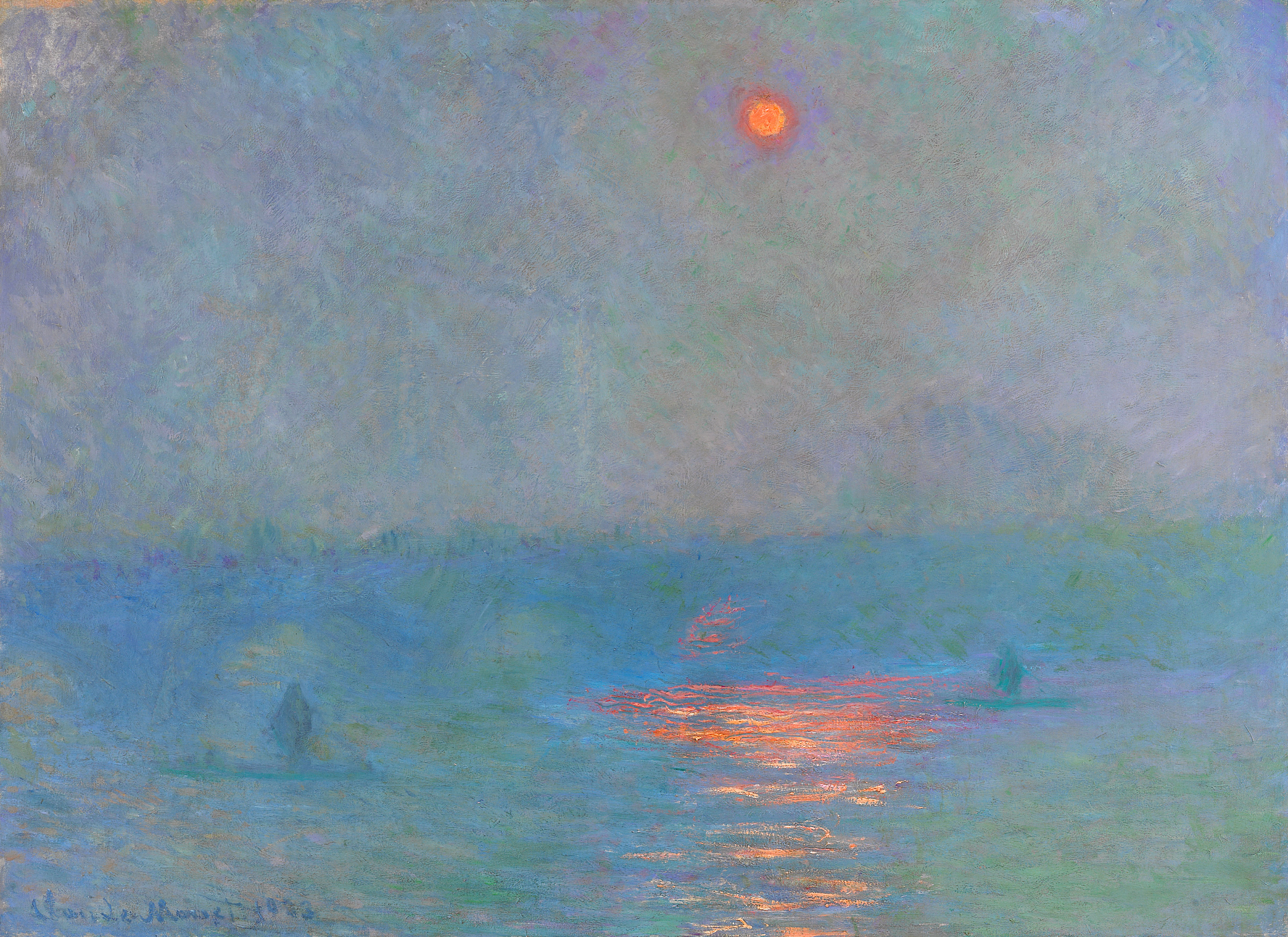
Claude Monet, Waterloo Bridge, Sunlight in the Fog, 1903
These metropolitan pictures provide a sharp contrast to the idyllic pastoral and romantic landscapes that characterize so many famous Impressionists and Neo-Impressionist images of the time. While I find beauty in Pont Boieldieu, Rouen, Effect of Fog, 1898 it differs wildly from Landscape at Saint-Charles, Near Gisors, Sunset, 1891. There is a beauty and a purity and clarity to the Landscape when compared to the Rouen fog. Grey’s and dullness of color lacking vibrancy and bordering on the homogenous mark these city-scapes. The sun is removed or shrouded by smoggy clouds. One can feel the depressive moan of factory engines or the blaring horn and churning of trains on a track.
In the natural world the colors are vibrant and differing. Shadows play off the sunset, unmarred by the suffocating smog that filled the urban skies of the period. Leaves and flowers and the quiet calm of peace fill these paintings. We think of long summer days that stretch on as if infinite. We can hear the birds chirping in the trees and we can see the clearness of the sky or the soft warm light of approaching sunset.
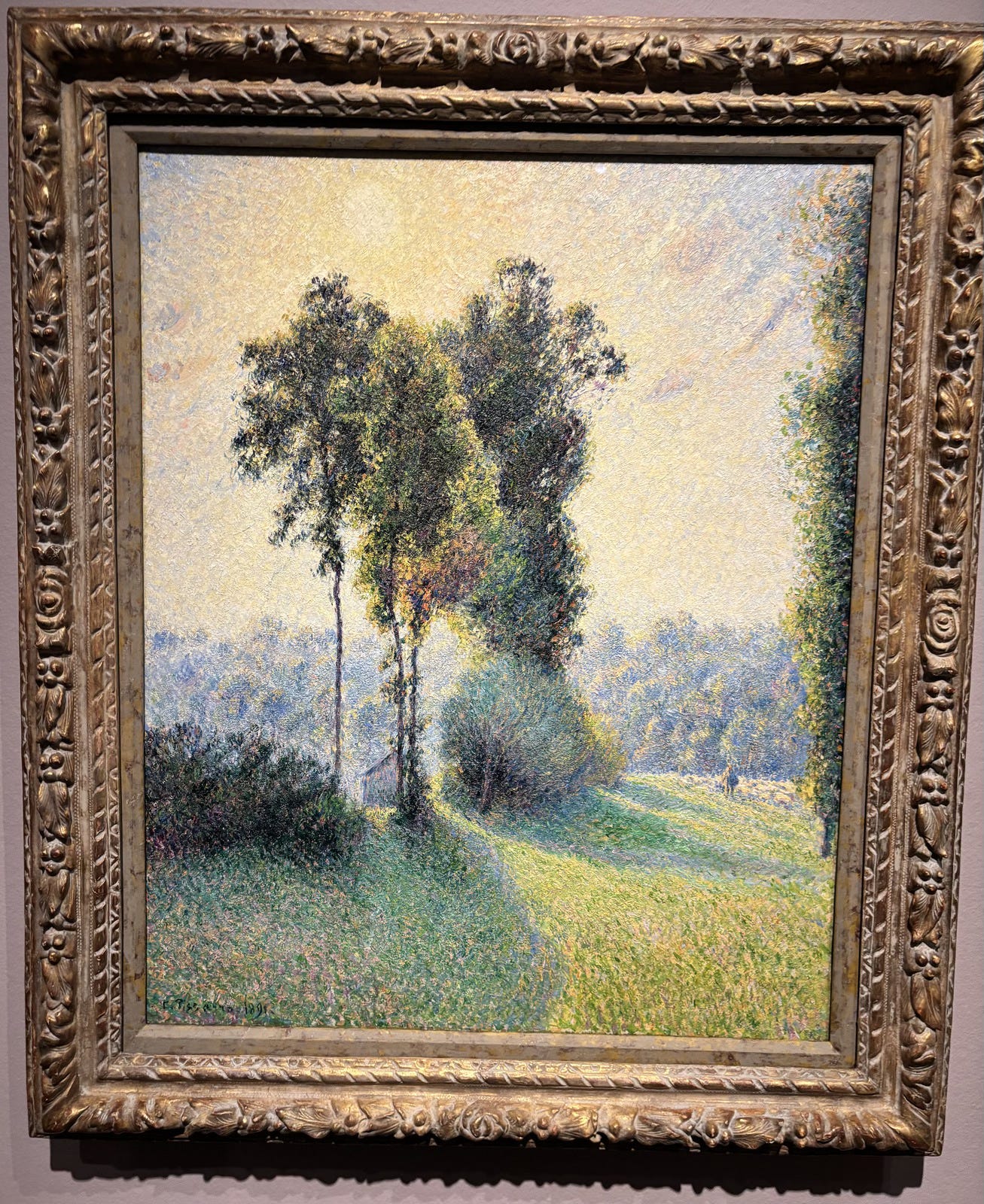
Camille Pissarro, Landscape at Saint-Charles, Near Gisors, Sunset, 1891
This contrast in view scape tells the story of the catastrophic air pollution of the era. It shows the costs of progress, the tradeoffs we made as we transitioned from human power to machine power. What they could never have known at the time is that the effects of these foggy cityscapes would result in risk of destruction to these beautiful and quaint plein air captured landscapes.
Pissarro and Monet could have stayed among the haystacks, lilies, country estates, rural villages, and fields. They could have remained in the countryside, following the footsteps of the romantic pastorals. But they did not. They entered the cities and the streets, and painted. They painted the good and the bad. They painted what they saw. They painted the beginning of the environmental catastrophe that infected the choked lungs of a generation.
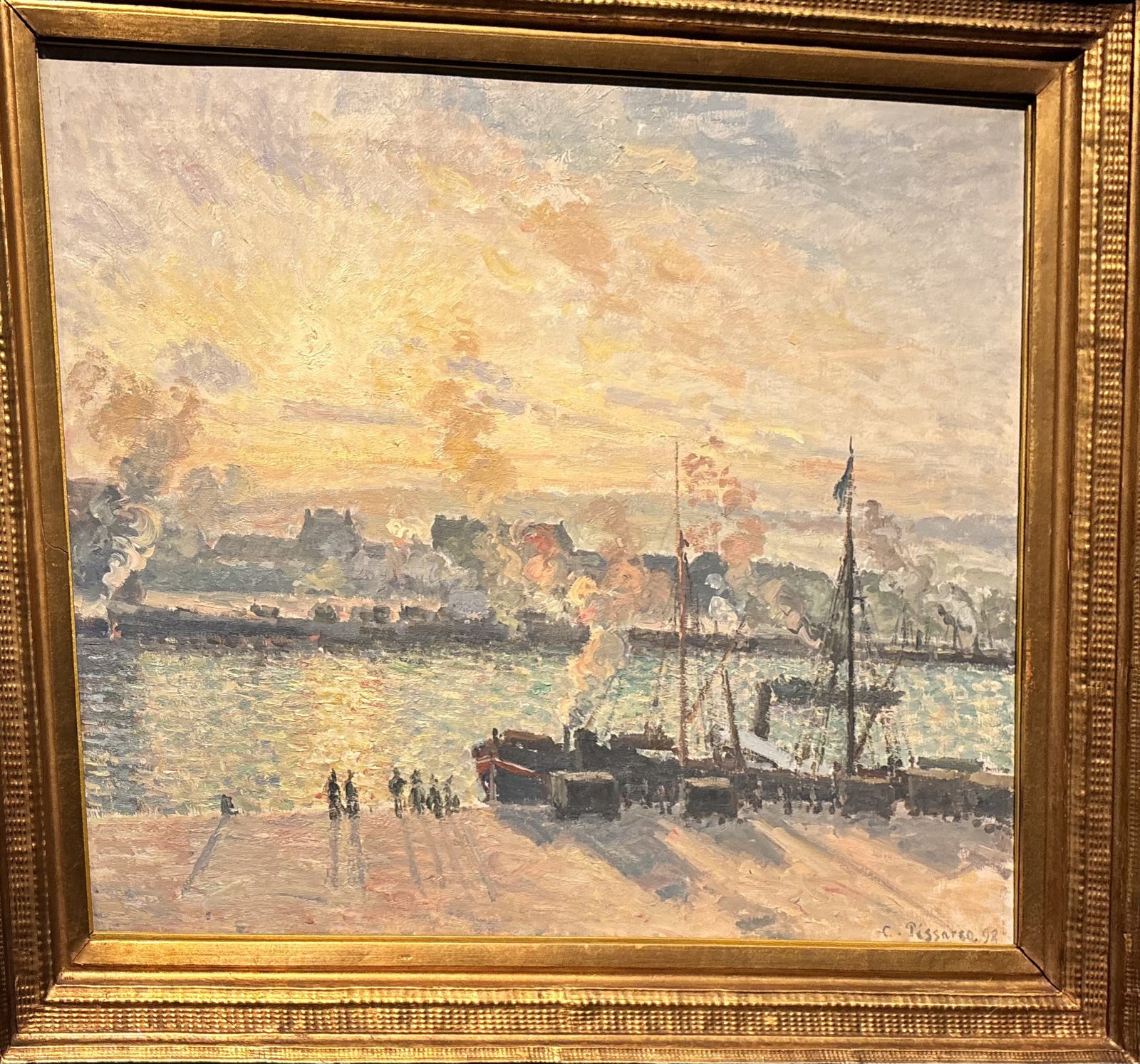
Camille Pissarro, Sunset, Port of Rouen (Steamboats), 1898
Next week at The Cultural Review: Yoga by Emmanuel Carrère