


It’s all about his face. The dark lines just beneath the eyes, not quite bags, but still conveying a weariness and sadness that feels impenetrable. His face is calm and relaxed and his eyebrows arch over and around his eyes making them seem recessed. His nose shoots forward and a thin chin juts out, the overall impression is of a falcon. It is the eyes though, the pupils only half visible due to drooping eyelids that hide something. Those dark brown eyes stare out into the void, into the vastness of existence, asking nothing more.
It is the indelible face of Homayoun Ershadi that pervades Abbas Kiarostami’s Palme d’Or winning film Taste of Cherry. It is a face that cut through the noise of distraction and advertising and urges one to watch this film, choosing it above all the other great films by great directors not yet seen. It is this face that haunts not only me but also Nicole Krauss in her unforgettable piece in The New Yorker.
It is a face that will continue to compel as long as the culture of film-watching exists. It is because this film and this face are inextricable. Everything the film says is transposed on this face that holds the camera’s unflinching gaze for long continuous periods. It is what we see through the car window, from the side, within the car, outside and resting, and lying down in the dark — flashes of light just briefly illuminating it.
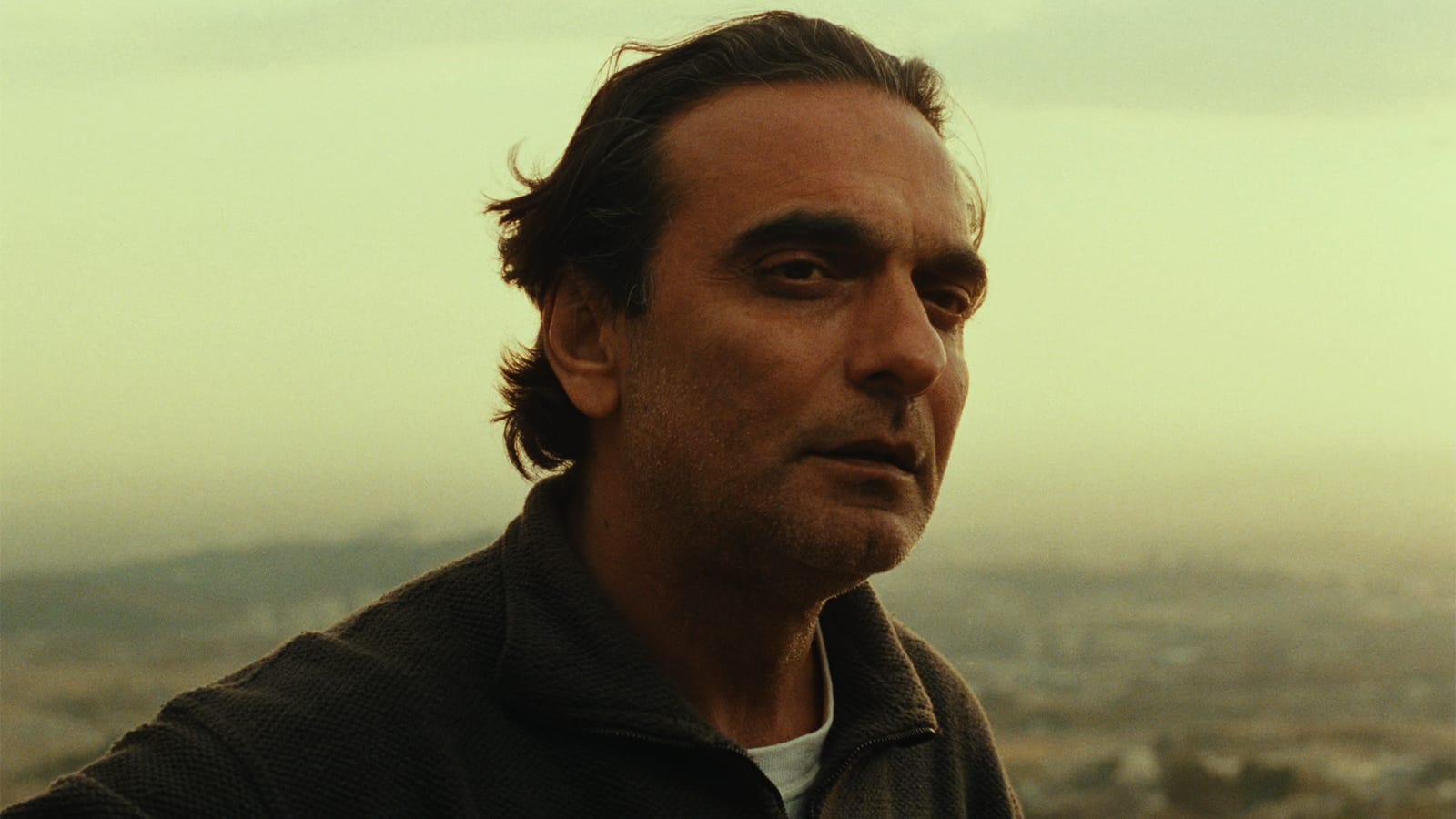
Ershadi was not a professional actor. He was an architect. Apparently, Kiarostami saw his face while sitting in traffic in his car and asked him to act in one of his films. It is the very image that dominates the film that Kiarostami first saw. Upon seeing such a face he asked Ershadi to act and to become a simulacrum of the filmmaker’s vision.
It could only be an unknown and non-actor who could fill the shoes of Mr. Badiei. We have no history with him. We don’t know his face, his tics, his movements. He is a mystery. He has depth and pain and feeling that hides behind the deep dark pools of his eyes. It is that unknown quality, that obscuring face, that is the guiding and dominating feature of Taste of Cherry.
We start out in town in his car. It’s a Range Rover and we immediately know that he is wealthy. His eyes gaze out amongst the crowded throng searching for something, for someone. But what does he want? What he is looking for has become common knowledge in the film community. It is pasted on the first sentence of any description you read about the film. There is a sense of unknown and unease that pervades the opening of the film that is somewhat dampened once you know the purpose of Mr. Badiei’s quest. We are almost 30 years on from the debut of this film, what else can be expected? It is testament that this knowing doesn’t ruin or detract from the film’s power.
He slowly meanders and drives out to the dusty bleak outskirts of Tehran. It is there that he propositions three different men to help him do the job he is singularly focused on. There is the soldier, the seminarian, and the taxidermist. Each is away from home, not quite belonging to the place they are living in, a Kurd, an Afghan, and a Turk.
What Mr. Badiei wants is for someone to bury him after he has taken his own life. He wants twenty shovels of earth over his dead and gone body. For life is no longer something he can stomach.
The soldier is a boy who doesn’t speak. He understands nothing. His fear grows and he eventually flees. The seminarian is young, but learned. He knows more about life, but through teaching and scripture, and not through life. He gently refuses as it is something he cannot do.
For this is not a simple ask. It is a crime under Islamic law. Anyone who helped him would be found guilty of a great sin and crime and could find their lives forfeit as well.
Mr. Badiei: I’ve decided to free myself from this life.
The seminarian: What for?
Mr. Badiei: It wouldn’t help you to know and I can’t talk about it and you wouldn’t understand. It’s not because you don’t understand but you can’t feel what I feel. You can sympathize, understand, show compassion. But feel my pain? No. You suffer and so do I. I understand you. You comprehend my pain, but you can’t feel it
Mr. Badiei does not reveal the source of his pain. He is not interested in explaining, nor is the film. There is no interest in telling and searching into the man’s psychology. Instead there is the wall between ourselves and Mr. Badiei, just as there are walls, to varying degrees, between ourselves and all others. Here the wall is higher and taller, but it doesn’t matter, because we can see the anguish on his face, we can see the pain he is carrying, even if we don’t know why or what that pain is.
Too often in film and television, and even literature we over explain and psychologize. Every new story is grounded in a persons trauma or an inciting incident and then the story must wade through this trauma and it becomes a complete explanation for the character. Here we have none of this modern baggage. He just is, he cannot explain it and even if he did, we could not feel as he does. So, instead of explaining, the film shows us how he feels through that famous face.
The lack of explanation can frustrate. It can alienate. Watching a Kiarostami film is a lesson in release from explanation. It is an invitation to engage and think genuinely and fully with the art. He will not hold your hand, he will not guide. And sometimes that is what we need. We need to be challenged and to think and to struggle with something, even if it doesn’t feel great. That is what Kiarostami provides, especially here, in the wondrous Taste of Cherry.
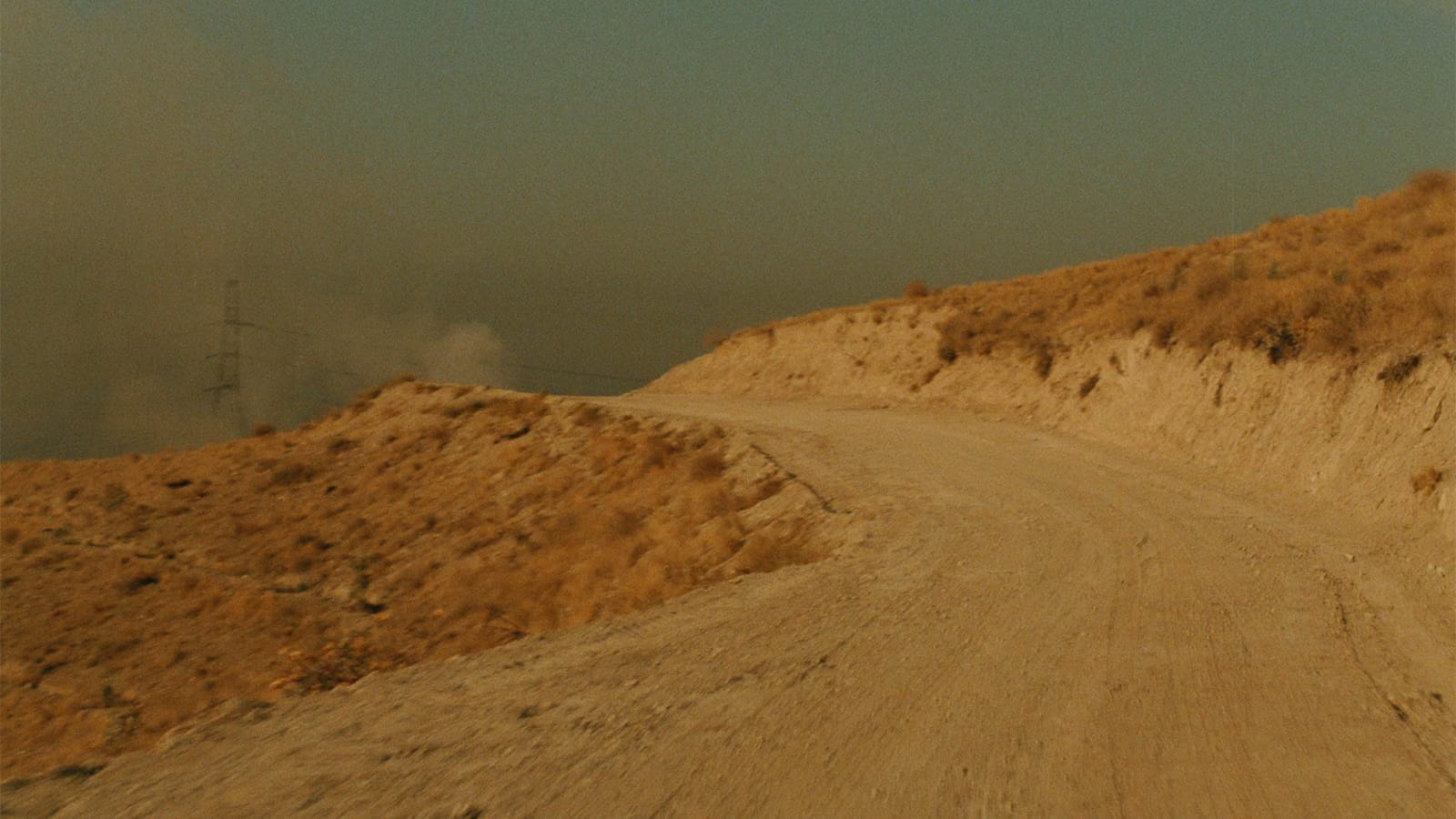
Kiarostami centers us in a dry barren area. Everything is brown and dusty and bleak. It matches Mr. Badiei’s outlook. He travels around in his car. He is removed from the world, he is separate from the workers that he briefly interacts with. It is only once someone enters his vehicle, his space, can he explain and convey the depths of his pain. They must enter into his sphere of being. He cannot, and will not, explain himself outside of his car, in that wider world he seeks to escape.
As he wanders this wasteland he fixates on scenes of earth being poured out of heavy equipment and down the slopes of the land. Here he is longing to be buried, longing to be covered with the earth and taken away from the barren wastes of the world that means nothing to him. It is these choices in filmmaking that enhance the story, that set the mood and the feeling. It is this which allows us to feel and understand without explanation.
Eventually, he meets the taxidermist, Mr. Bagheri. He is older and has experienced life. He speaks more, and talks to Mr. Badiei. He tells him of life, of his life and his pain. He does not lecture or run away with fear. He understands and communicates with empathy and understanding while still opposing the cold finality of death.
If you look at the four seasons, each season brings fruit. In summer, there's fruit, in autumn, too. Winter brings different fruit and spring, too. No mother can fill her fridge with such a variety of fruit for her children. No mother can do as much for her children as God does for His creatures. You want to refuse all that? You want to give it all up? You want to give up the taste of cherries?
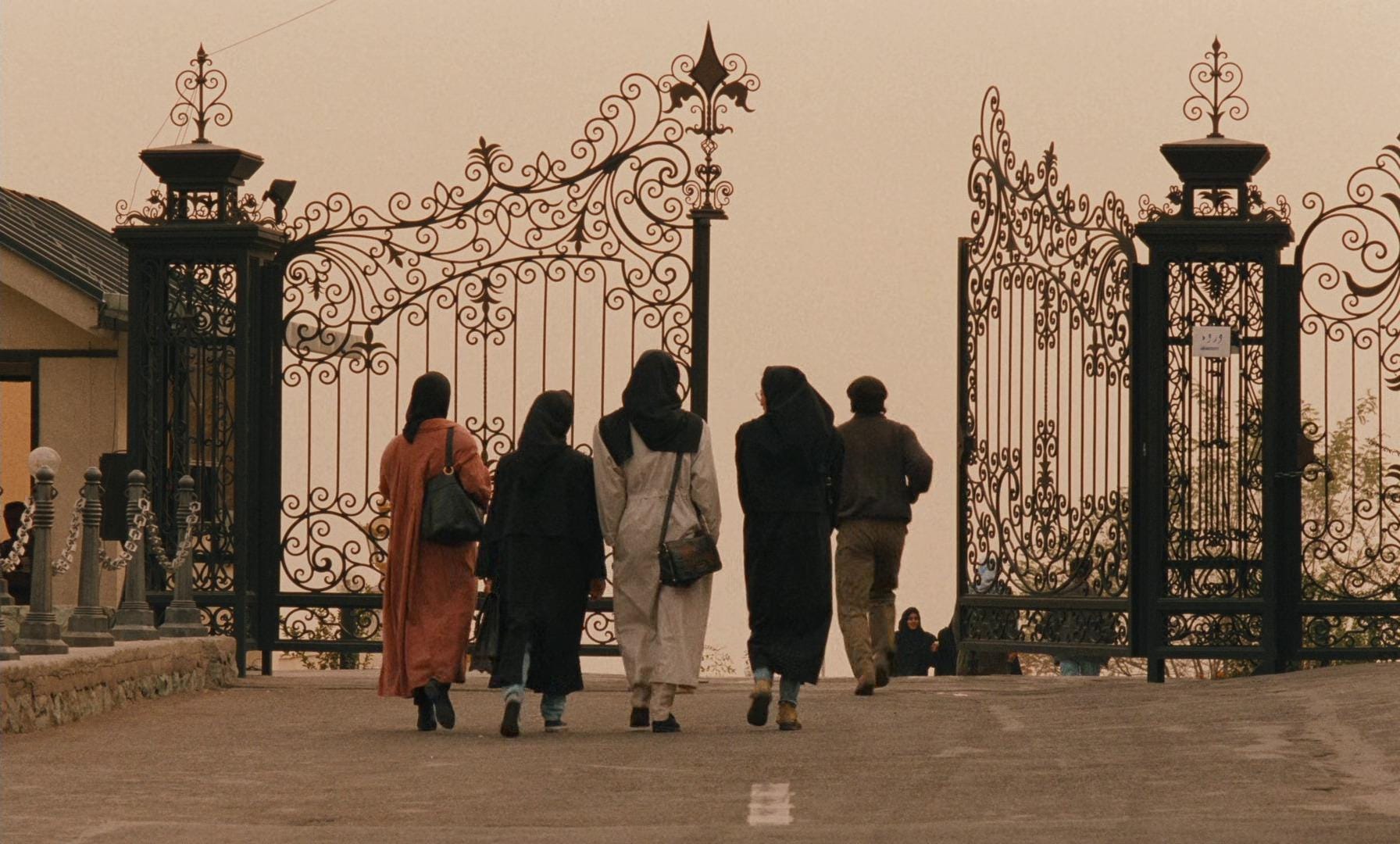
Mr. Bagheri agrees to the job and is dropped off at the museum where he works. We see him, in silhouette, enter through the gates and disappear. Then the unexpected happens and Mr. Badiei parks and runs after him into the museum. He passes through the very same gate, as if it were the gate of heaven itself and he had found salvation.
He finds Mr. Bagheri and begs him to throw stones at him and shake him in case he is merely asleep and not dead. Doubt has seeded in his mind and he is unsure now, for the first time.
He returns to his apartment and then takes a taxi to the site of his hole. He smokes a cigarette and climbs into his hole and watches the moon and the clouds and the storms and we cut to black.
We never see him take the threatened sleeping pills as he climbs into the hole. The only act we see is of a desperate and sad man crawl into a hole to watch the sky. Did he listen to life and to Mr. Bagheri? Did he pass through the gates of heaven to be saved? We don’t know.
The black of the screen disappears and grainy colored VHS images reveal themselves. The bare brown hills are now green. Soldiers are marching and singing, exactly in the way Mr. Badiei described to the scared soldier as his happiest memories. We see a film crew and Kiarostami and Ershadi. We are no longer in the world of the film. We are witnessing the making of the film. Reality has taken over fantasy and the lines are blurred. It is an enduring obsession of Kiarostami.
Soldiers laugh and goof around on the hillside. The film shoot is over. Music begins to play for the first time. Louis Armstrong trumpets wail. We see a car, one that looks like Mr. Badiei’s wrapping around the curve and the film is over.
Is it a cheap trick? Is it brilliant? What does it mean? Kiarostami refuses a simple explanation, an understanding, a happy and cathartic ending. He makes us think and question. He makes the watcher become a participant in the film. It is for each of us to decide if Mr. Badiei entered the gates of heaven, the world of color, and lived to taste God’s fruit again. Or, if he fell prey to the bleak dull despair of dark nights, brown dusty slopes, and an isolated and removed existence.
You can watch Taste of Cherry at The Criterion Collection
Next week at The Cultural Review: The Sunday Times Golden Globe Race